What Is Emotional Eating?
Eating to soothe emotions rather than hunger: the signs and causes of emotional eating, and ways to cope with it.


If You Eat When You're Stressed, This Is for You!
Eating is one of our most basic needs. We eat when we feel hungry. Physiologically, the hypothalamus is responsible for food intake, energy expenditure and the sensations of hunger, fullness and thirst. Changes in blood glucose levels and differences in the release of the hormones insulin and glucagon send hunger or fullness signals to the brain, prompting the corresponding behaviour (eating, or stopping once we're full). If hunger were purely physiological, we would eat when hungry and leave the table once we had taken in the nutrients, minerals and vitamins we need. But because psychological, social and organic factors also play a part in this mechanism, we can end up eating more than we need; the extra calories come back to us as weight, we feel unhappy with our changing body, we keep eating because of that unhappiness, and we can slide into a depressed mood.
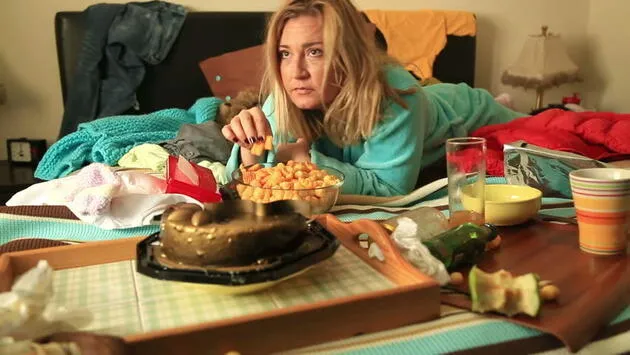
Emotional eating is turning to food to regulate negative emotions even when you are not hungry. Examples include eating after difficulties in a relationship (jealousy, abandonment, being cheated on and so on), eating to forget what happened or to feel better, eating to celebrate (birthdays, anniversaries, a promotion, get-togethers), eating out of boredom and, after a while, eating simply out of habit.
Emotional eating is thought to be influenced by culture and may be a learned behaviour; whether our needs to be loved, approved of and valued were met in early childhood is also thought to play a role. People turn to food as a way of coping with the negative life events and emotions they experience.
How Can We Tell Emotional Hunger from Physical Hunger?
First of all, emotional hunger doesn't build up gradually like physical hunger; it appears suddenly, like a crisis. People turn to food especially when they feel sadness, shame or anger, or experience hopelessness and loneliness. Those intense feelings they can't tolerate push them towards eating. At such moments the choice is usually fast food and high-calorie processed snacks, to the point that people may feel they have lost control and can't stop eating. In healthy, physiological eating, on the other hand, a person is usually aware of what and how much they are eating. In emotional eating, that awareness is gone. As a result, people may feel shame, regret and guilt after an episode of emotional eating.

In a study carried out at the University of London (Braet et al., 2007), students were divided into two groups. One group was asked to give a four-minute presentation after lunch and told that it would be video-recorded and assessed. The other group was told that after lunch they would attend a conference as listeners. The group asked to give a presentation was found to choose processed foods rich in carbohydrates, sugar and fat for lunch. Indeed, studies support the finding that sugary, high-carbohydrate foods promote the release of amino acids in the brain that help regulate mood.

How Can We Cope with Emotional Eating?
In psychotherapy for emotional eating (for example, in cognitive behavioural therapy), gaining awareness comes first. The work follows steps such as noticing emotions, thoughts and behaviours, identifying the factors that trigger episodes of emotional eating, recognising the emotions involved, developing functional coping strategies in place of eating episodes, which are a dysfunctional way of coping, and learning to stay with and regulate emotions.
People can try to reach this awareness on their own by observing themselves, and can try to discover alternative ways of coping. However, psychological support is always a safer path and one more likely to lead to a solution.
Braet, C., Soetens, B., Moens, E., Mels, S., Goossens, L., & Vlierberghe, L.V. (2007). Are two informants better than one? Parent–child agreement on the eating styles of children who are overweight. European eating disorders review, 15 (6), 410–417.